Joe Rogan posted about getting plasmapheresis last week, and my phone hasn't stopped. The questions are always some version of the same thing: How much does this cost? Is it covered by insurance? And is it worth it?
Fair questions. Plasmapheresis, more precisely called therapeutic plasma exchange (or TPE), is one of the most talked-about procedures in longevity medicine right now. But pricing in this space is opaque. Most clinics make you book a consultation before they'll even mention a number, and the few that publish pricing publicly show a range wide enough to make you wonder if they're even describing the same procedure.
So here's the straightforward breakdown I'd want if I were in your position.
In short: a single therapeutic plasma exchange (TPE) session in the U.S. typically costs $6,000 to $12,000. The price depends on the level of physician oversight, geography, and whether lab work is included. TPE for longevity or detoxification is rarely covered by insurance, so most patients pay out of pocket.
What TPE Actually Costs
A single therapeutic plasma exchange session at a private outpatient clinic in the U.S. runs between $6,000 and $12,000. It is tempting to read the high end as better care, but in this space price and quality do not reliably track together. The machine and the disposables are much the same everywhere, and a good part of what separates a $6,000 clinic from a $12,000 one is non-clinical: overhead, real estate, and how much a clinic bundles into the price. What actually determines the quality of your treatment is clinical, and it does not depend on being at the top of the range: above all, whether the physician accountable for your care has genuine depth in apheresis, someone who has personally run many of these procedures. That kind of expertise is available at the lower end of the price range.
That range is wide, and it should make you ask questions. The core procedure is largely the same across clinics: your blood goes through an apheresis machine, your plasma is separated and replaced with albumin, and your blood cells are returned. What you are really paying for sits around that procedure, not in it.
What You're Actually Paying For
The apheresis machine and disposables. TPE requires a medical-grade apheresis device, the same class of machine used in hospital blood banks and transplant centers. The tubing kits, filters, and collection sets are single-use and must be replaced for every patient.
Albumin. When your plasma is removed, the albumin in it has to be replaced to maintain oncotic pressure, which is what keeps fluid in your blood vessels and supports stable blood pressure. It is a real, per-session consumable, and a genuine part of what each session costs.
Physician oversight. The procedure itself is run by a trained nurse or technician, and they are the first line of your care: a skilled apheresis nurse is every bit as important to a safe treatment as the physician. What differs between clinics is the depth of apheresis expertise backing that nurse up. At some clinics, the covering physician has no specific training in apheresis at all. At others, an apheresis-experienced physician is directly accountable for your procedure, whether at the bedside or immediately reachable in real time. That backing matters most when something has to be adjusted mid-procedure, like flow rates or a citrate reaction: you want a team that has managed it before, and a physician genuinely available the moment it happens rather than a name on the schedule. These are meaningfully different levels of care.
"The question isn't just what TPE costs. It's what you're getting for that cost, and who's in the room when your blood is outside your body."
Pre-procedure evaluation. A responsible TPE program doesn't start with the machine. It starts with a clinical evaluation: your medical history, current medications, lab work, and a conversation about what TPE can and can't do for your specific situation.
Lab work. Bloodwork before and after the procedure (inflammatory markers, metabolic panels, toxin panels, or biological age testing) is typically billed separately. This can add several hundred dollars to the total cost of a treatment cycle and is worth asking about upfront.
Why Prices Vary
Geography. A clinic in Manhattan or Beverly Hills has different overhead than one in Nashville or Mill Valley. This is real, but it only explains part of the spread.
Physician credentials. TPE is a blood-based medical procedure, developed in transfusion medicine and clinical pathology. A supervising physician who is board-certified in a blood-related specialty and has personally performed hundreds or thousands of apheresis procedures brings a depth of experience that directly shapes the safety and quality of your treatment, and that experience is worth weighing when you compare programs.
Protocol design. A maintenance exchange for a healthy longevity patient is a different undertaking than a multi-session intensive protocol for someone with an autoimmune condition or elevated toxic burden. Clinics that tailor protocols to each patient are doing more complex work than those running the same session for everyone.
Insurance
For most people reading this, the short answer is: TPE for longevity, detoxification, or preventive purposes is not covered by insurance.
TPE is covered when performed for specific FDA-approved or ASFA-recognized indications: conditions like thrombotic thrombocytopenic purpura, myasthenia gravis, Guillain-Barre syndrome, and certain other autoimmune and hematologic disorders. In select cases, insurance has also covered TPE for Alzheimer's disease, though this is not standard and typically requires prior authorization and clinical documentation.
If your primary interest is TPE for longevity, cognitive health, or detoxification, expect to pay out of pocket. Some clinics accept HSA or FSA funds, which is worth asking about.
Pricing at Global Apheresis
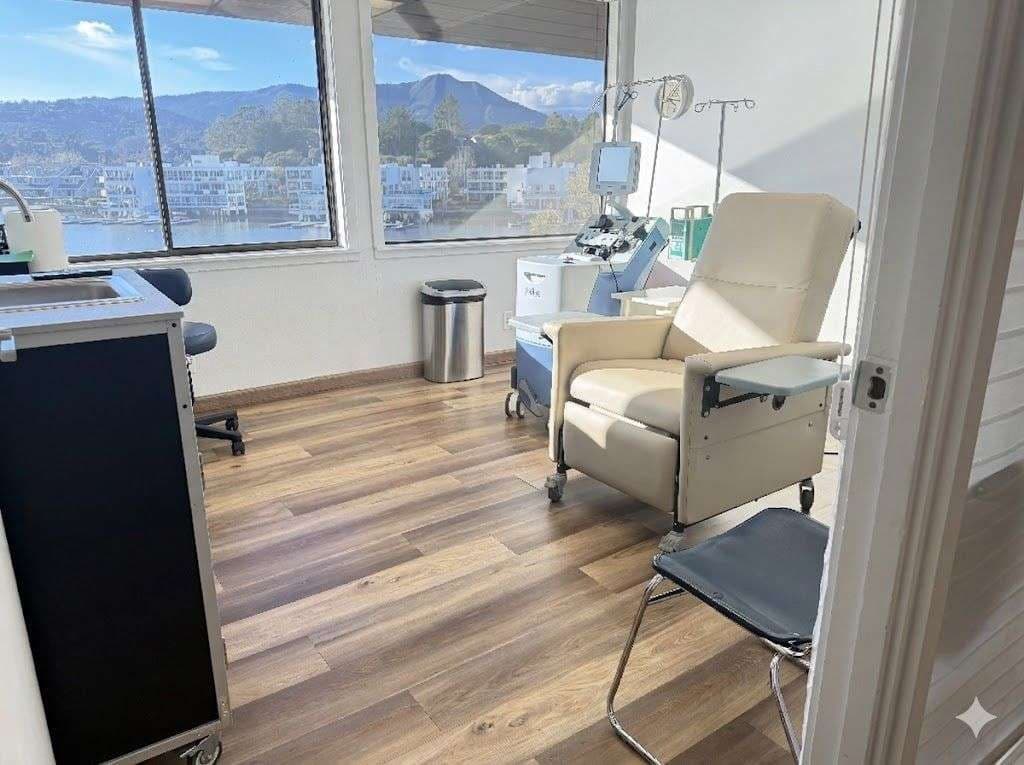
At Global Apheresis in Mill Valley, California, a single TPE session is $8,000. Because TPE is most effective as a series of treatments rather than a one-off session, we also offer multi-session protocols with per-session pricing as low as $6,000 depending on the treatment plan.
That includes the procedure itself and physician supervision from a team led by Dr. Dobri Kiprov, who has personally overseen more than 15,000 TPE treatments over his career. Lab work is billed separately so patients only pay for the panels that are clinically relevant to their situation.
Every patient starts with a discovery call. Not a sales pitch, but a clinical conversation about your health history, your goals, and whether TPE is appropriate for you. If it is, we build a personalized protocol and walk through the pricing before anything is scheduled. No surprises.
The Bottom Line
Therapeutic plasma exchange is a legitimate medical procedure with a growing evidence base, not a luxury wellness trend, regardless of who's posting about it on Instagram. The cost reflects that. If you're evaluating clinics, focus less on finding the lowest price and more on understanding what you're actually paying for.