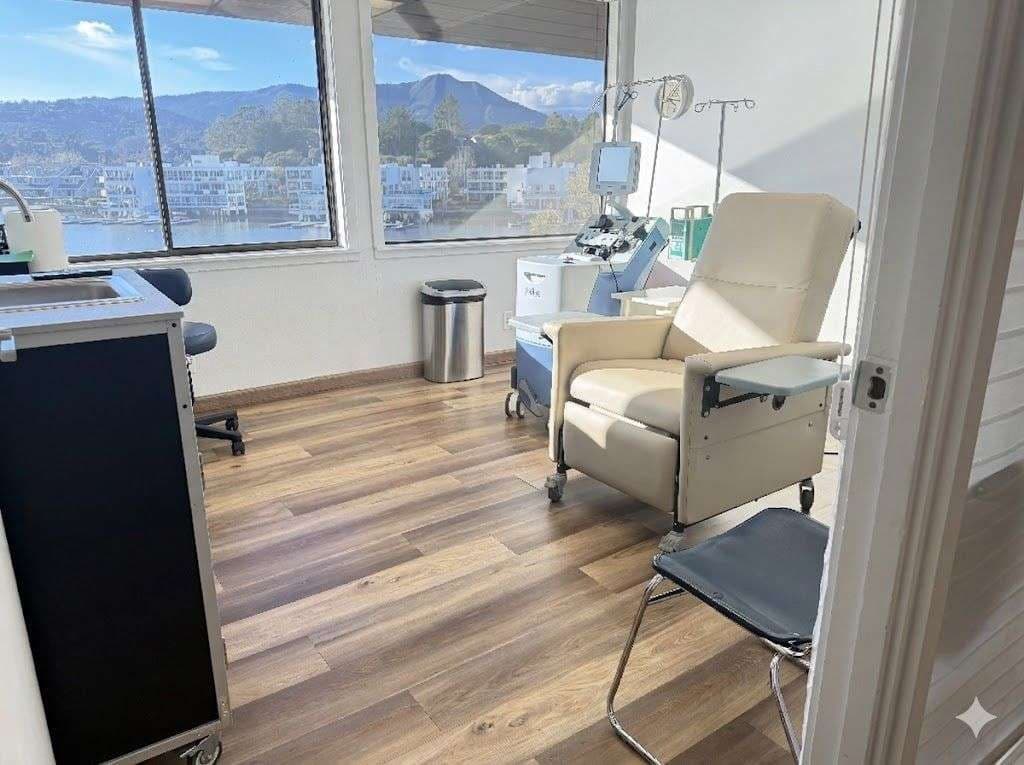
Therapeutic plasma exchange has moved steadily from hospital-based acute care into outpatient medicine over the past decade. For regenerative medicine clinics, longevity practices, and functional medicine providers, it represents one of the most substantive procedural expansions available, and one of the most operationally demanding. This guide covers what the decision actually involves.
Clinical Landscape
The first question is whether your patient population has clear indications and the financial means to pursue the procedure. While there are over 100 indications described by The American Society For Apheresis in its most recent guidelines, most of these scenarios are best served in the hospital setting either because of their acute presentation or established payor networks. Autoimmune diseases like Guillain-Barré, chronic inflammatory demyelinating polyneuropathy, and multiple sclerosis come to mind.
In the outpatient world, most clinics are looking at serving those interested in general health and longevity, post-viral syndromes like Long-COVID, mild cognitive decline, and Alzheimer's disease. There is a growing body of evidence for these indications, however, most hospital systems routinely turn these people away even when they offer to pay cash.
Most outpatient TPE programs price procedures in the range of $6,000–$12,000 per session depending on clinic location, overhead structure, and protocol design. Insurance typically does not cover longevity or wellness indications, so patients pay out of pocket.
Why Is It So Expensive?
Once you've determined if your patient mix will be able to benefit and afford the procedure, you will need to decide whether or not you can afford to offer it.
While I don't have exact figures I will provide a rough estimate of the costs. First, you'll need the machine. There are two FDA-approved machines available in the United States, the Fresenius Kabi Amicus and the Spectra Optia by Terumo. Each machine is over $100,000 brand new. They also require disposable kits that cost several hundred dollars a piece. You'll need tubing, IV sets, and needles/catheters. You'll also need albumin as the replacement fluid, which can run close to $1,000 per procedure depending on how much you wish to exchange. My rough estimate of per procedure costs, excluding nursing salaries, doctor salaries, and the cost of the machine is about $1,500 per procedure.
If you're an already established clinic, you're already paying the overhead costs like rent and you can lower overall cost further by obtaining training for your own nurses to run the procedure. If you're looking to launch a clinic solely to offer PLEX, you'll need to consider all the additional costs.
"The upfront costs are substantial and the learning curve is steep, but for practices that get the implementation right, TPE represents a clinical capability very few outpatient programs can offer."
Staffing Requirements
You'll need a physician or advanced practice provider to supervise the procedure as well as a nurse to run the procedure. It is best practice to have the nurse stay with the patient for the entirety of the procedure to monitor for side effects and track vitals every 15–20 minutes. Many clinics prefer to have two nurses available as some complications are best handled with a second pair of hands.
It is important to obtain sufficient training for all staff. While the procedure appears simple enough, it is a medical procedure that comes with a certain amount of risk and requires adequate medical knowledge and technical skills. Staff should be well informed about the proper indications for the procedure, all contraindications, timing of the procedure, selecting appropriate parameters, and adverse events. The supervisor should be familiar and comfortable with the machine, but the nurse is typically the technical expert.
There are several options for training clinical staff, including those offered by established practices or machine manufacturers that provide training on their specific machines. I've personally been very happy with the training and customer service provided by Fresenius Kabi.
"The nurse is typically the technical expert. The physician's role is clinical judgment: patient selection, protocol design, and managing the unexpected."
Safety Considerations
Patient safety protocols are crucial. You'll need comprehensive pre-procedure screening protocols, emergency response procedures, and detailed documentation systems. Understanding contraindications is essential: conditions like severe cardiovascular disease, active bleeding, or inadequate vascular access can pose significant risks.
Patient Selection and Protocols
For longevity and wellness applications, patient selection becomes more nuanced than traditional medical indications. You'll want to establish clear protocols for evaluating candidates, including comprehensive health assessments, laboratory evaluations, and realistic expectation setting.
Consider developing treatment protocols that specify exchange volumes, replacement fluids, and session frequency. Many clinics start with conservative approaches and adjust based on patient response and emerging research.
Implementation Timeline
Phase 1: Planning and Preparation (3–6 months)
- Market analysis and financial projections
- Regulatory compliance research for your state
- Equipment procurement and facility modifications
- Staff hiring and initial training arrangements
- Insurance and liability considerations
Phase 2: Setup and Training (2–3 months)
- Machine installation and testing
- Comprehensive staff training completion
- Protocol development and safety procedures
- Initial patient identification and screening
- Marketing and referral network development
Phase 3: Launch and Optimization (3–6 months)
- Pilot procedures with carefully selected patients
- Protocol refinement based on initial experience
- Staff competency validation
- Quality assurance implementation
- Volume building and operational efficiency
The Reality Check
The honest assessment: implementing TPE is not trivial. The upfront costs are substantial, the regulatory requirements are complex, and the learning curve is steep. The operational complexity is routinely underestimated, and the margin for error in a procedure involving specialized equipment and patient safety is narrow.
The successful clinics I've observed typically have either extensive experience with similar procedures or access to expert guidance during implementation. The margin for error is small when you're dealing with expensive equipment, complex procedures, and patient safety.
Getting Expert Help
Most practices benefit significantly from experienced consultation during the planning and early implementation phases. Whether it's navigating equipment selection, developing protocols, training staff, or troubleshooting operational challenges, having access to someone who's already solved these problems can save both time and money.
For providers seriously considering TPE implementation, Global Apheresis offers a formal affiliate partnership program. This includes clinical guidance, protocol development support, staff training resources, and access to the operational experience of one of the most established therapeutic apheresis programs in the country. Practices in this network benefit from a structured framework rather than building from scratch.
If you're evaluating whether TPE is viable for your practice, the affiliate program is the right starting point.