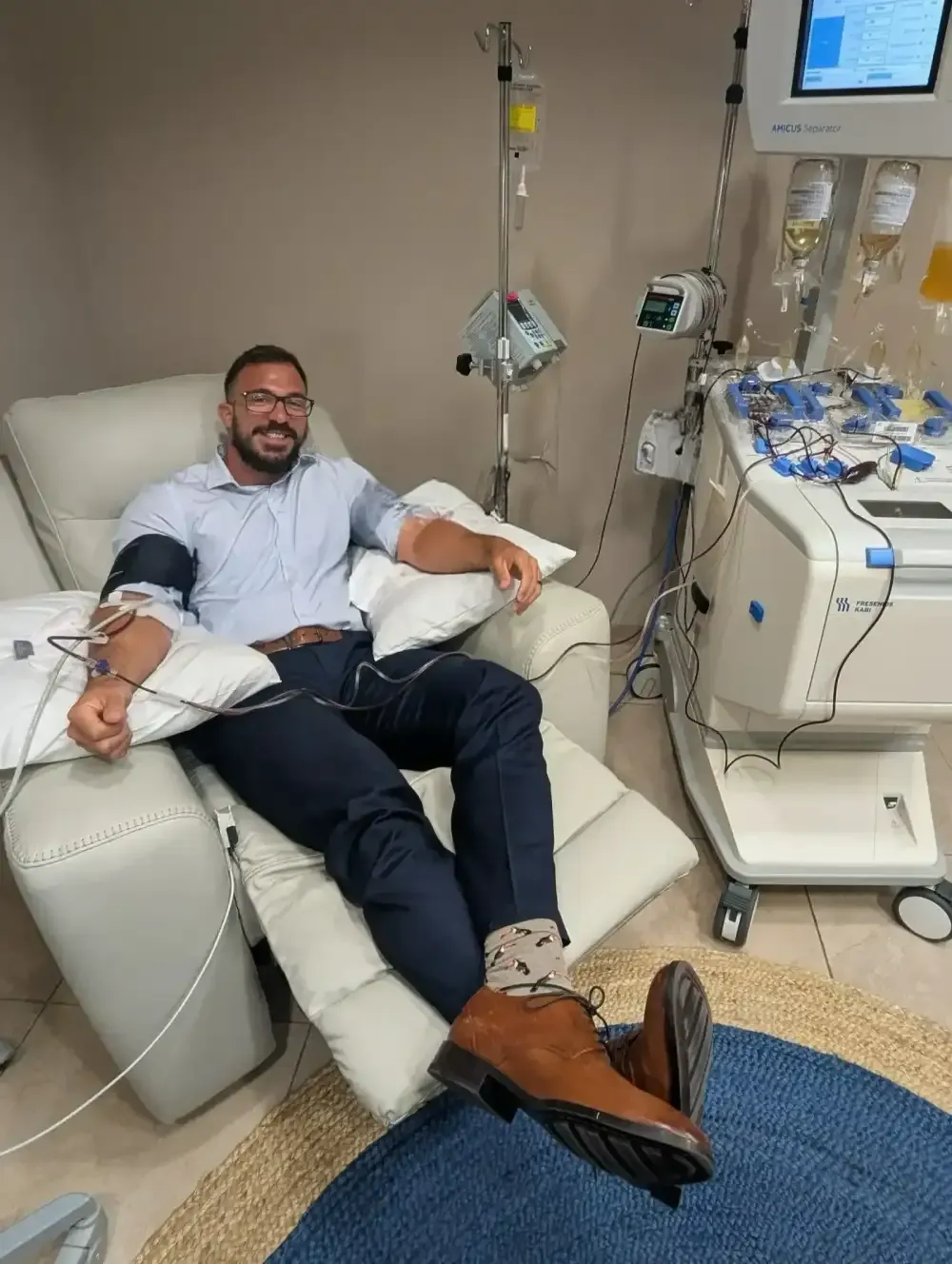
For years, one of the most frustrating things about microplastics has been that we could measure them but couldn't do anything about them. They turn up in blood, in placentas, in arterial plaque, and the standard advice has been some version of "try to be exposed to less." For something already circulating in your body, there was no intervention. No off-ramp.
A new study in the Journal of Clinical Apheresis changes that conversation. For the first time, researchers have shown that therapeutic plasma exchange (TPE) can lower the microplastic burden in human blood. This is the first demonstration that we can purposefully remove these particles from a person, and as someone who has built a career around plasma exchange, I think it's a genuinely important moment.
Let me walk through what the study found, why it matters, and what I'm changing in my own practice as a result.
In short: yes. A new study in the Journal of Clinical Apheresis found that a single therapeutic plasma exchange cut circulating microplastics by roughly 60% in patients who started with a high burden, the first evidence these particles can be deliberately removed from the body. Patients with very low starting levels saw no drop.
What plasma exchange is, briefly
TPE is a mechanical procedure, not a drug. A machine separates the plasma (the liquid part of your blood that carries dissolved proteins, hormones, and, it turns out, a lot of unwanted passengers) from your blood cells. That plasma is discarded and replaced with clean medical-grade albumin, and your cells are returned to you. We have used it in hospitals for decades to treat serious autoimmune and neurological diseases by physically removing the harmful antibodies and inflammatory molecules driving them.
The insight of the last few decades is simple: those harmful antibodies aren't the only thing floating in plasma worth removing.
The finding
The researchers measured circulating microplastics in 114 patients before and after 174 plasma exchange procedures. The headline result: in patients who started with a high microplastic burden, a single plasma exchange cut their circulating levels by roughly 60%. That is a large, statistically convincing effect, and it confirms what the mechanism predicts: if a particle is suspended in plasma and you remove the plasma, the particle goes with it.
There's an important wrinkle, and I want to be upfront about it because it actually points to how we make the procedure better. In patients who started with very low microplastic levels, the measured count after treatment didn't drop. It ticked up slightly. The likely explanation is that the disposable plastic tubing and fluid bags used in the procedure shed a small number of microplastic particles of their own. When a patient's starting burden is high, the amount removed dwarfs that contamination and the net effect is a big reduction. When the starting burden is already low, the small amount shed by the circuit can outweigh what little there is to remove.
In other words: the therapy works, and the equipment introduces a measurable but manageable amount of contamination. That's an engineering problem, and engineering problems have solutions.
Microplastics aren't the only passenger
Here's the part that makes this bigger than any single particle. Microplastics are one of several things plasma exchange clears, and the case for the procedure rests on all of them together.
The most established is inflammation. TPE physically removes circulating inflammatory mediators and immune complexes, and that mechanism is exactly why it works in diseases like myasthenia gravis and Guillain-Barré. The biology there isn't speculative; it's the basis of the procedure's decades-long track record.
Then there are the "forever chemicals," PFAS. A randomized controlled trial showed that simply donating plasma every six weeks lowered people's PFOS levels by roughly 30% over a year. PFAS bind tightly to albumin, which is the very protein plasma exchange swaps out, so it stands to reason that a procedure removing far more plasma than a single donation would lower these chemicals at least as effectively, and almost certainly much more.
Heavy metals are another example: the fraction circulating in plasma comes out by the same mechanism. And then there is what I consider one of the most compelling reasons to pay attention to this procedure at all: the rejuvenating effect of removing and replacing aged plasma. This isn't a new or fringe idea. It grows out of roughly two decades of research, beginning with the parabiosis experiments that showed old tissue could be revitalized when exposed to a younger systemic environment, and extending through the more recent work on plasma dilution. The thesis is that plasma accumulates pro-aging factors over time, and that exchanging it shifts the body back toward a more youthful signaling state. I've watched what this does for patients, and I believe in it. The through-line across all of these is the same: plasma carries a great deal we'd be better off without, and TPE is the most direct way we have to take it out.
So when someone asks whether a small, transient uptick in microplastics at low starting levels should stop them from a plasma exchange they're doing for these broader reasons, my answer is no. It's a minor, fixable detail against a procedure that's working on several fronts at once, not a reason to walk away from it.
What I'm changing in my practice
Knowing that the circuit itself can shed a few particles, I'm not waiting for a second study to act on it. These changes cost almost nothing and can only help.
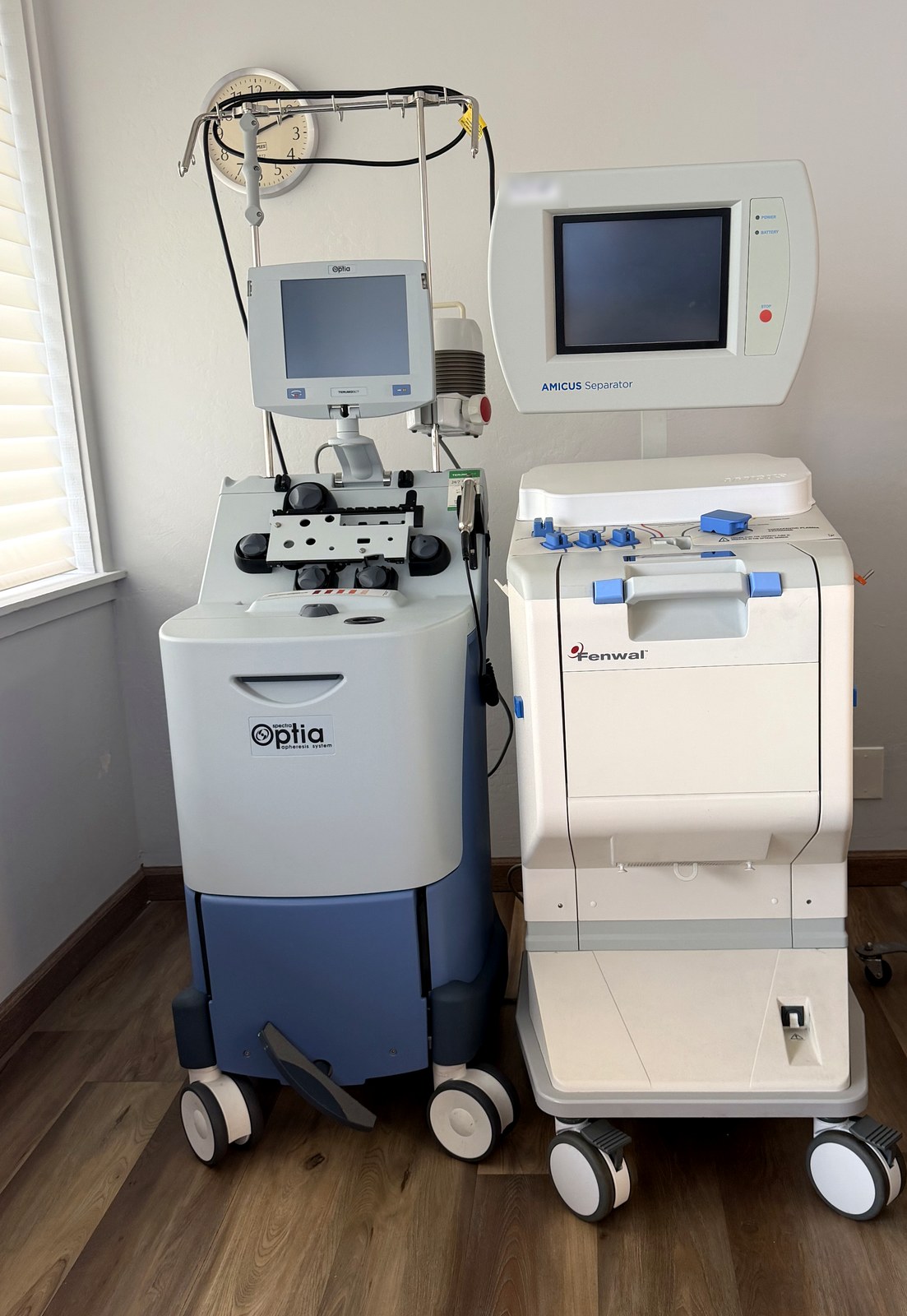
First, I'm flushing the circuit more than we already do. We always prime the system and send that first flush to waste before a patient is ever connected; that's standard. What I'm adding is a second pass. The contamination evidence points to the very first volume of fluid through fresh tubing carrying the heaviest particle load, so flushing it twice rather than once sends even more of that initial burden down the drain instead of into the patient. On the Spectra Optia, this is straightforward: the system supports double priming, so I'm using it. The Amicus also flushes, but it has no automatic double-prime setting, so there the solution is simply to run additional saline through the circuit manually before connection. Either way, the dirtiest fraction never reaches you.
Second, I'm minimizing use of the blood warmer. When the researchers sampled fluid from different points in the circuit, the warmer tubing carried the highest microplastic counts of any site they tested, and higher still after it had been heated. That difference didn't reach statistical significance, so I won't overstate it; it's a suggestion, not a proof. But it's a suggestion that lines up with common sense. A warmer adds another length of plastic to the path and runs hot for most of a procedure, and heat is exactly the kind of thing you'd expect to coax more particles out of plastic. When a warmer isn't clinically necessary, leaving it out removes a plausible source of contamination at no cost. I'd rather err toward fewer plastic surfaces in the path.
These are small refinements, but they reflect how I think this field should move: take the signal seriously, tighten the technique, and reduce avoidable contamination while the larger questions get answered.
The bigger picture: total body burden
The honest limitation of this study, which the authors acknowledge, is that it measured plastic in the blood, and most of the plastic in your body is sitting in tissue. Clearing the bloodstream once doesn't empty the reservoir.
But here's the model I'm working from, and I think it's a reasonable one. Microplastics don't appear to be locked permanently in place; they move between tissue and the bloodstream. If that's true, then lowering the level in the blood creates a gradient, and over a series of treatments, combined with genuinely reducing your ongoing exposure, it stands to reason that you can draw the total burden down over time. It's the same diffusion logic that governs how we clear other substances from the body. We can't yet put a number on how many sessions that would take, and I won't pretend otherwise. But the direction is sound, and it's the framework I expect the next wave of research to test.
Where this goes
This is a first study, and like any first study it needs to be repeated, ideally with independent validation of the testing method. I'll be watching that closely. But I don't think the appropriate response to a promising first result is to wait years with our hands folded. We have a tool that has been safely used for decades, a clear mechanism, and now the first direct evidence that it does something we couldn't do before.
For the first time, "you have microplastics in your blood" comes with a second sentence: and there may be something we can do about it. That's worth being optimistic about.
This post discusses emerging research and the reasoning behind clinical decisions. It is not medical advice. Therapeutic plasma exchange carries risks and is appropriate only for selected patients; whether it's right for you is a conversation to have with a physician who knows your history.